A Hegelian Understanding of Photography
The Analog Process as a Dialectic:
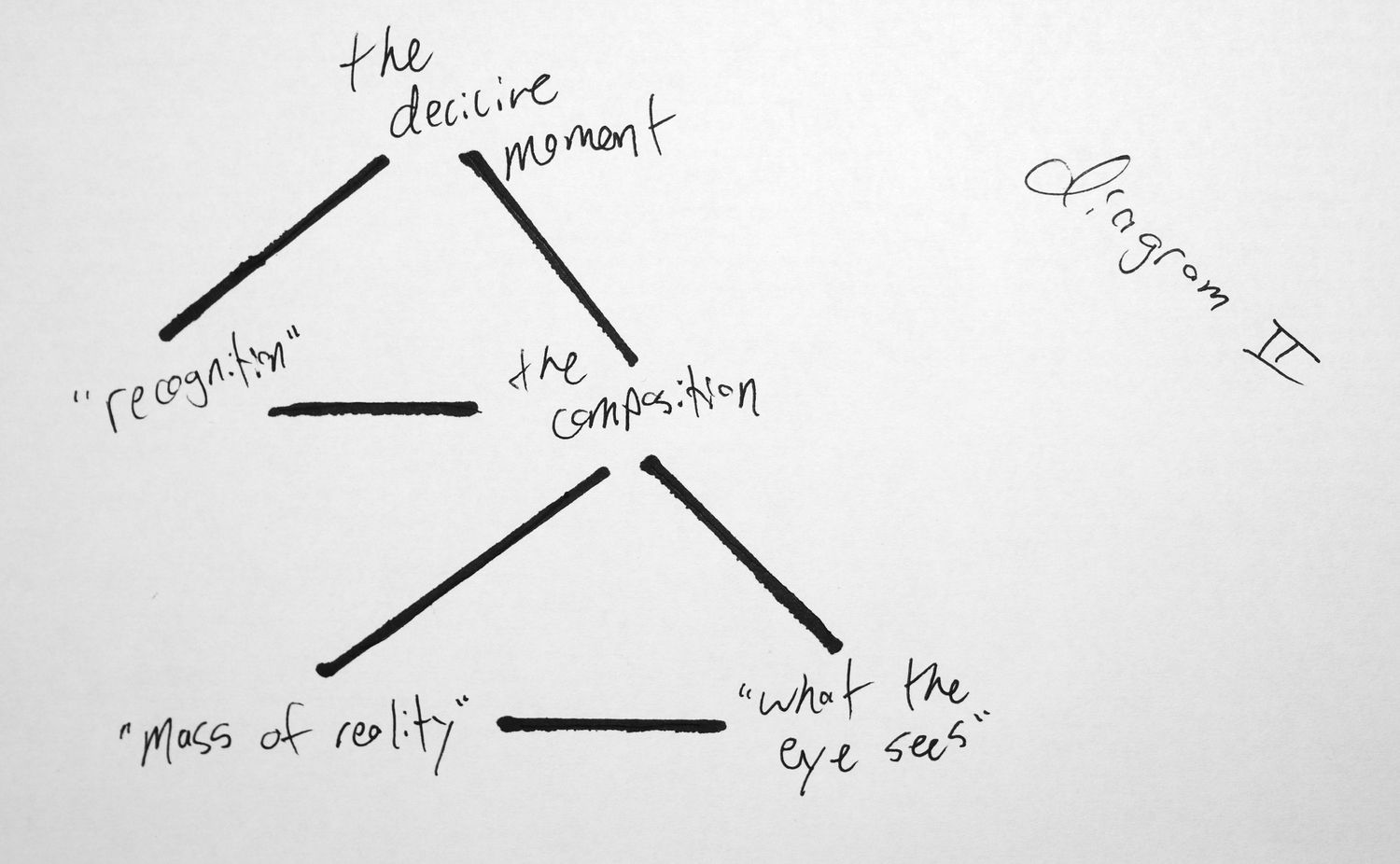
An image begins as negation: A whole scene from an entire planet of scenes is selected, and hence the rest of the world is negated. And, more specifically, the scene selected is mostly negated by selection of a frame and often further by use of a large aperture which blurs all but what has been focused on. The scene is reduced down to one rectangle which is recorded by a photosensitive surface. Henri Cartier Bresson’s The Decisive Moment is a dialectical work (see diagram 2). He explains composition and the negation therein in this quote:
Photography implies the recognition of a rhythm in the world of real things. What the eye does is to find and focus on the particular subject within the mass of reality… In a photograph, composition is the result of a simultaneous coalition, the organic coordination of elements seen by the eye. One does not add composition as though it were an afterthought superimposed on the basic subject material, since it is impossible to separate content from form (Cartier-Bresson).
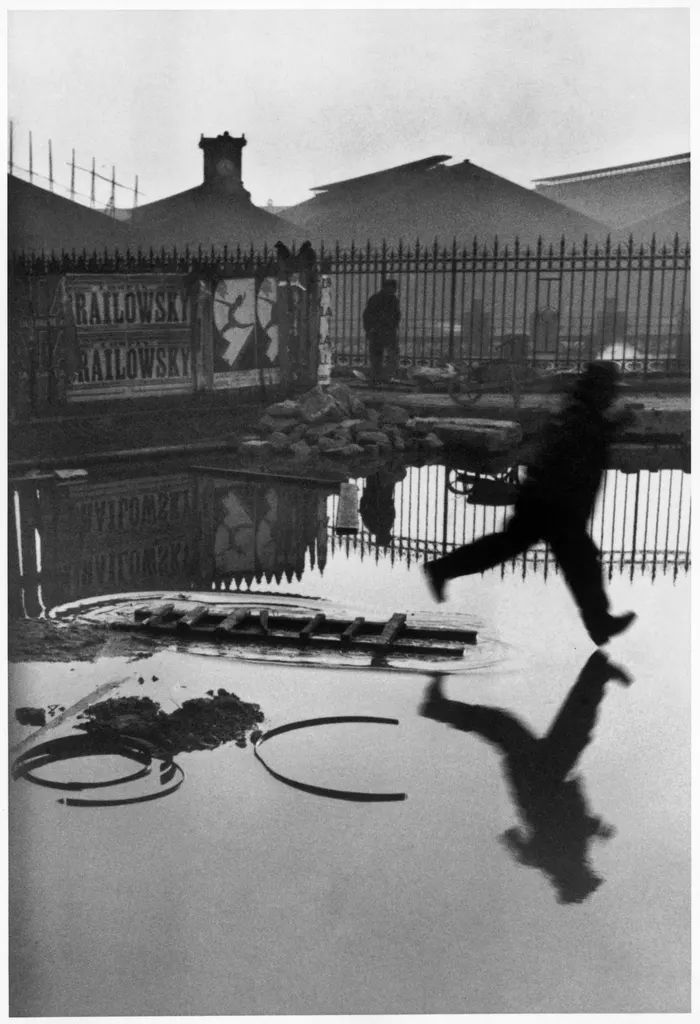
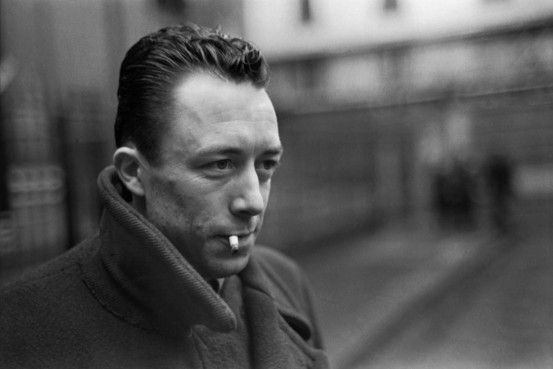
Below: (Left) An Image from CARTIER-BRESSON's DECISIVE Moment, Cartier-Bresson's famous image of Albert Camus [See Citations 1 & 2]
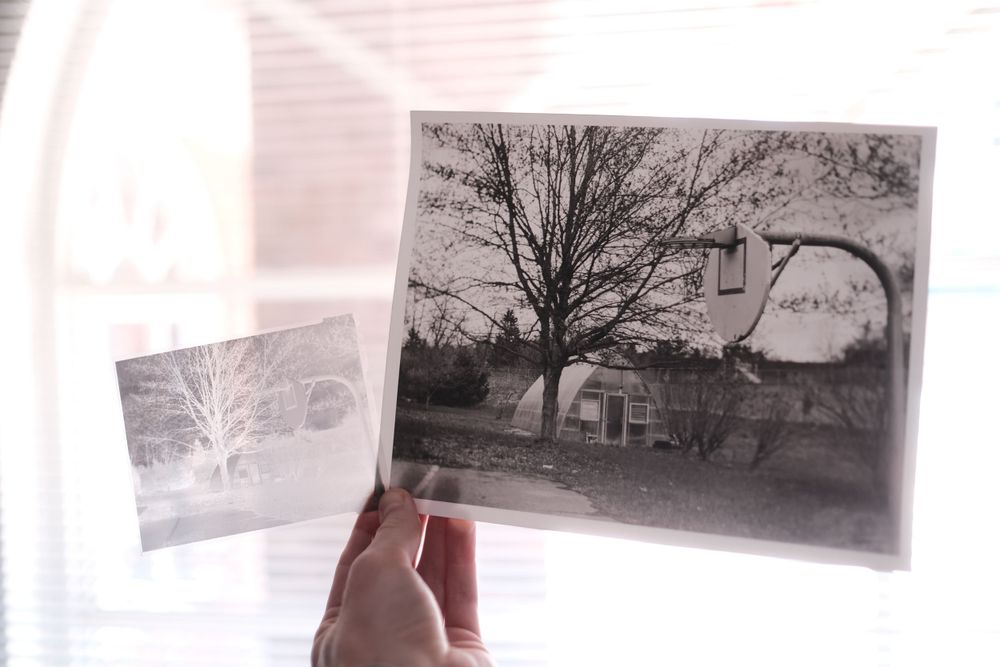
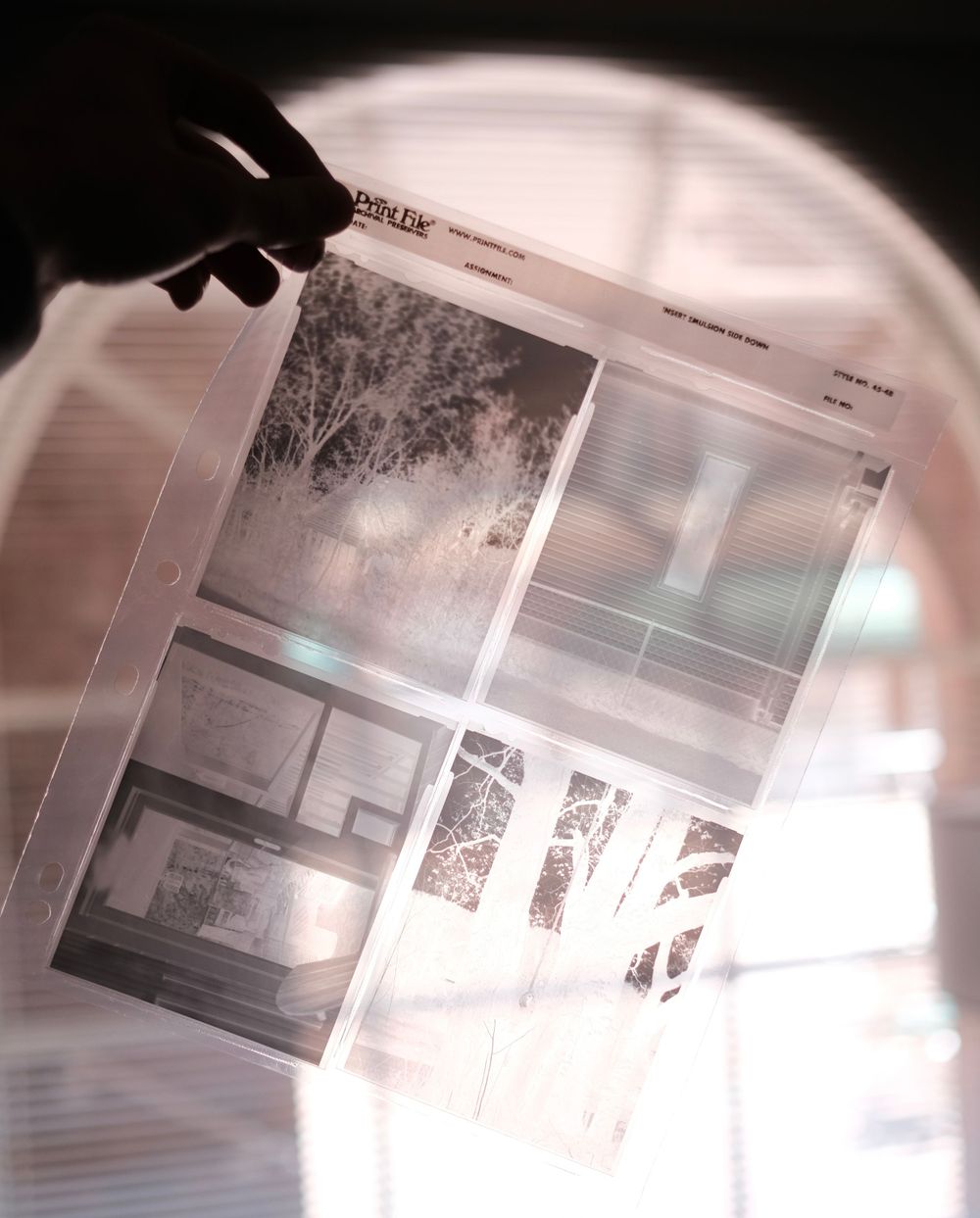
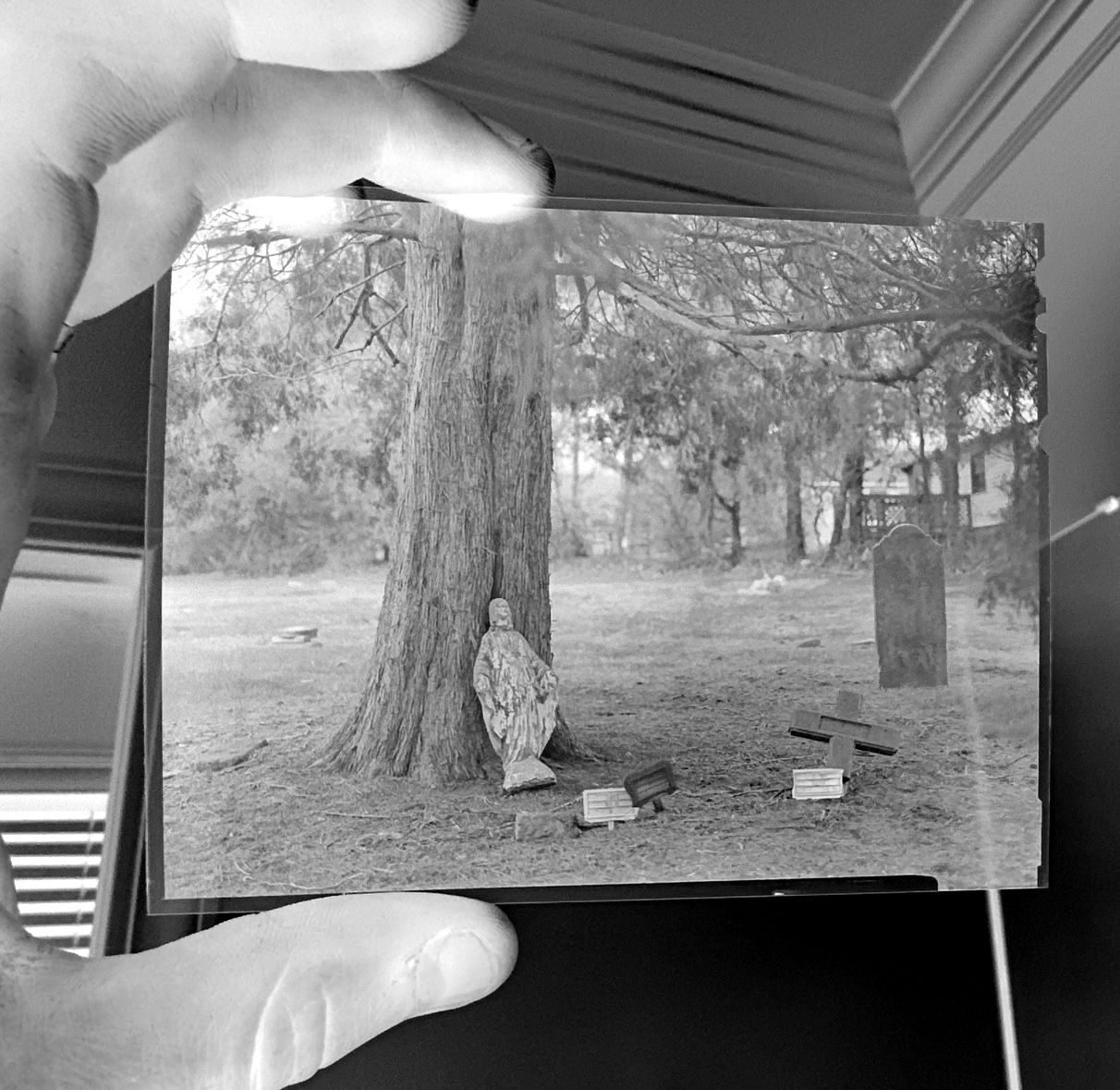
This photosensitive material, when film, is either recorded as what is technically referred to as a “negative” or is converted to a positive by an enlarger. In the case of digital, a computer chip is required to convert the light parts of the image, which burn dark into the sensor, and the darks, which leave little info on the sensor (a dimmer tone). Thus, it turns the negative image into a positive image. Negating occurs in terms of what one chooses to throw out in terms of their work. It was said, for instance, that philosopher Derek Parfit shot thousands of rolls of film in his lifetime, but he only thought he’d made around 120 successful photos (Derbyshire, Johnathan). When deciding what images to print in the dark room, to show an audience, or to label success is itself an act of negation.
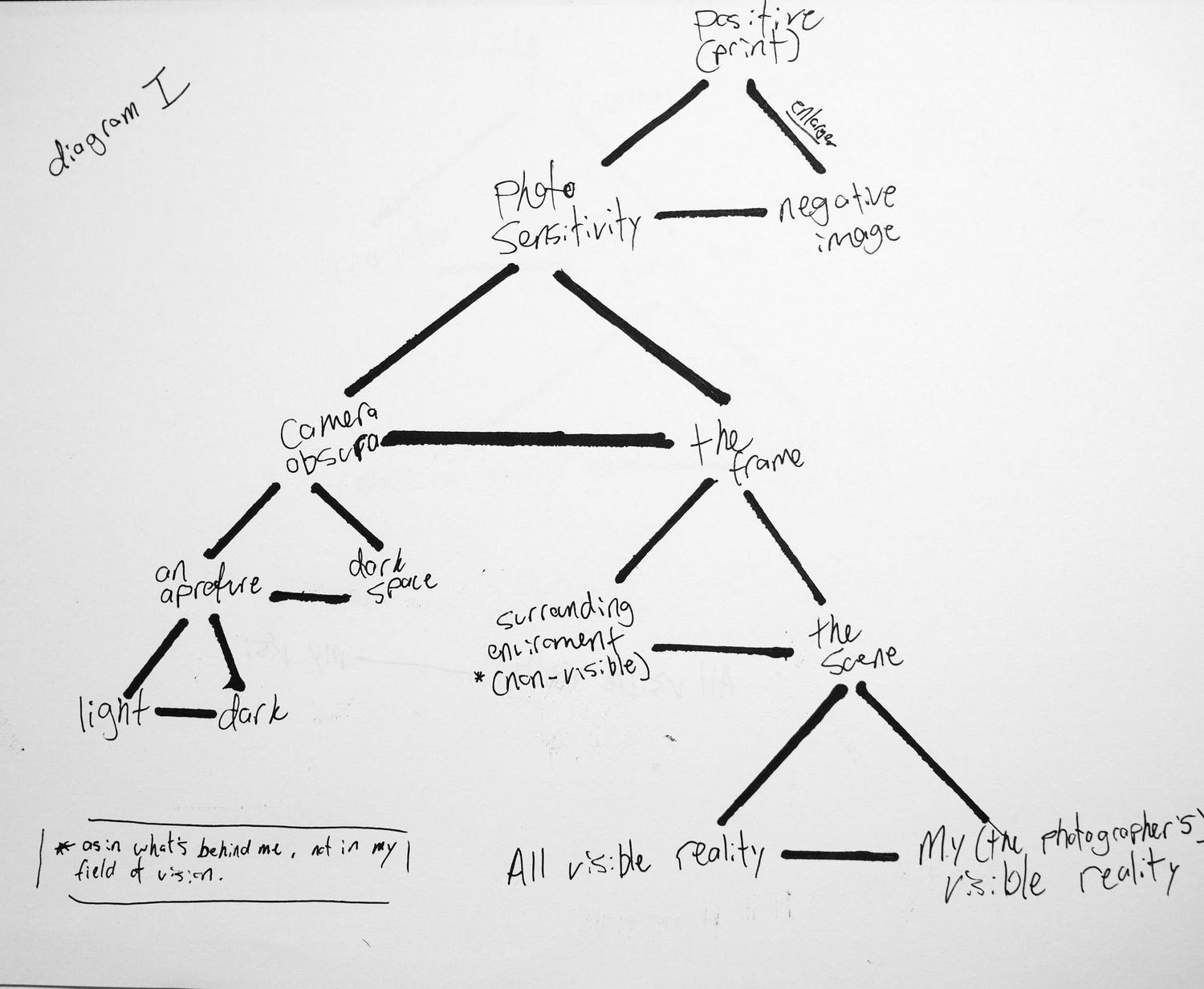
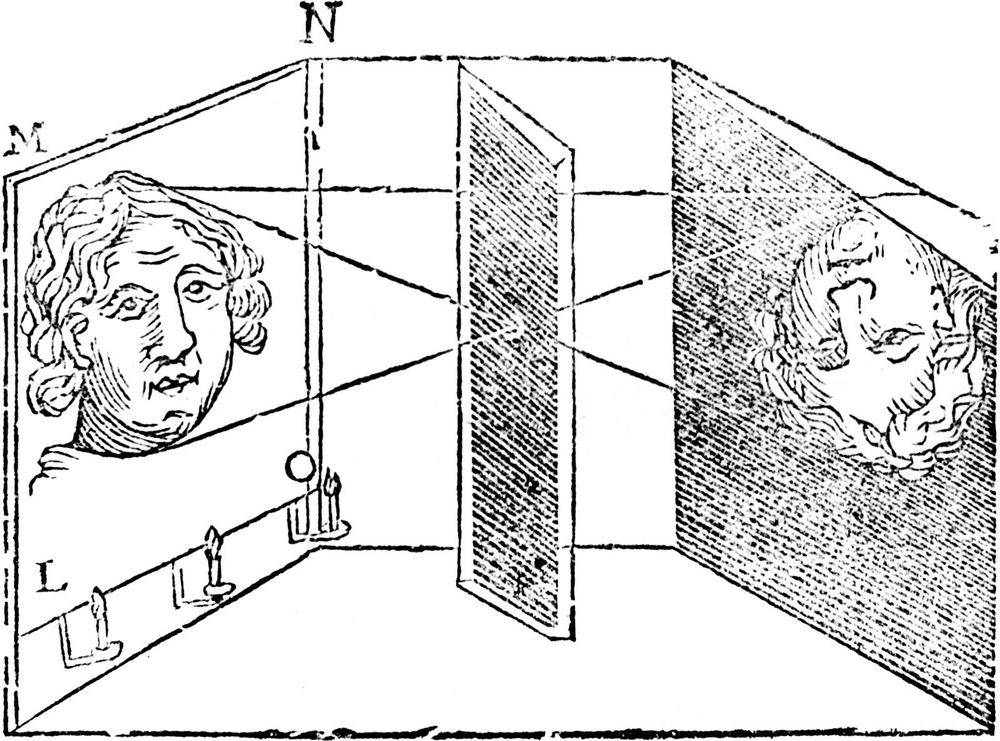
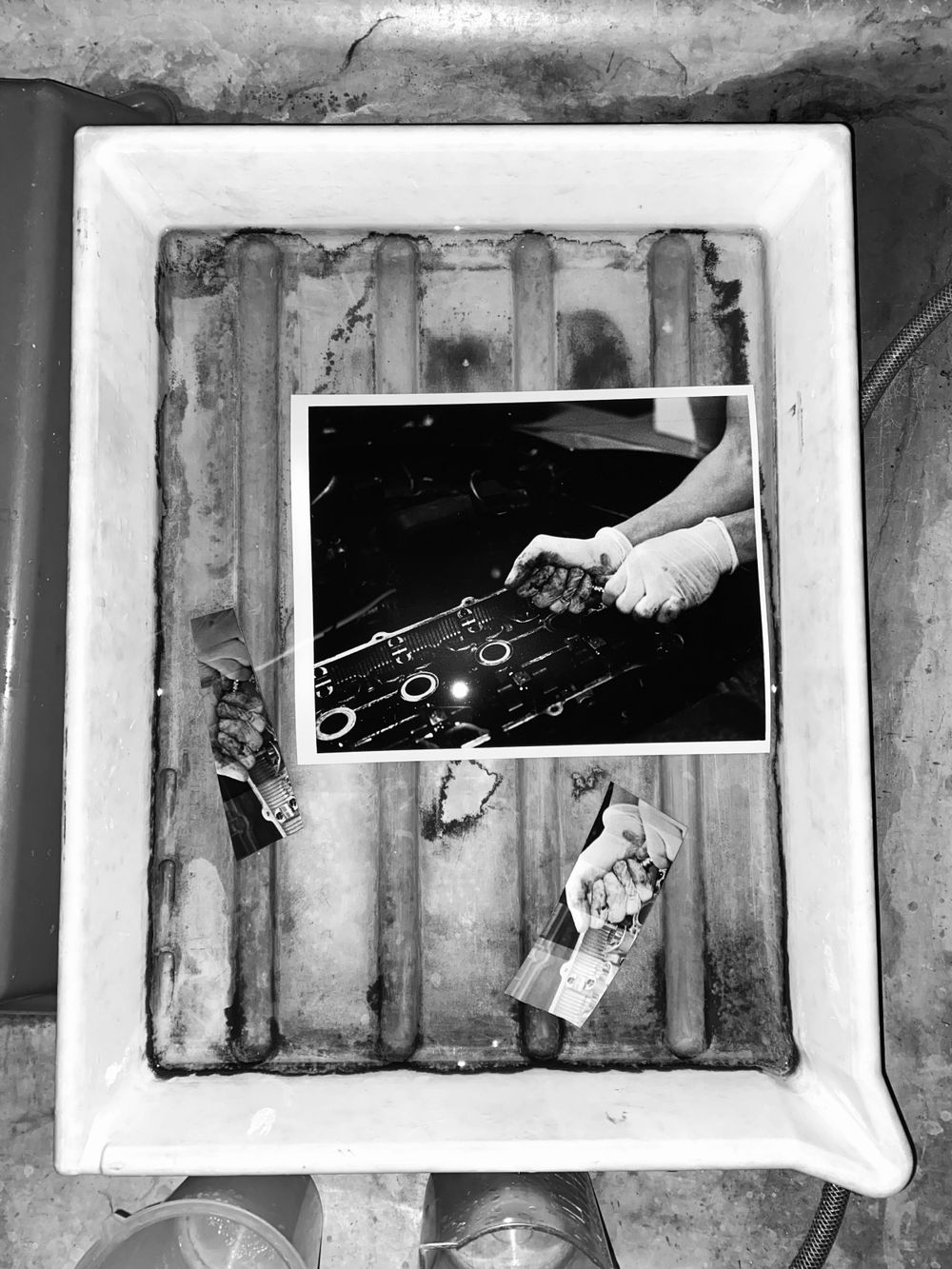
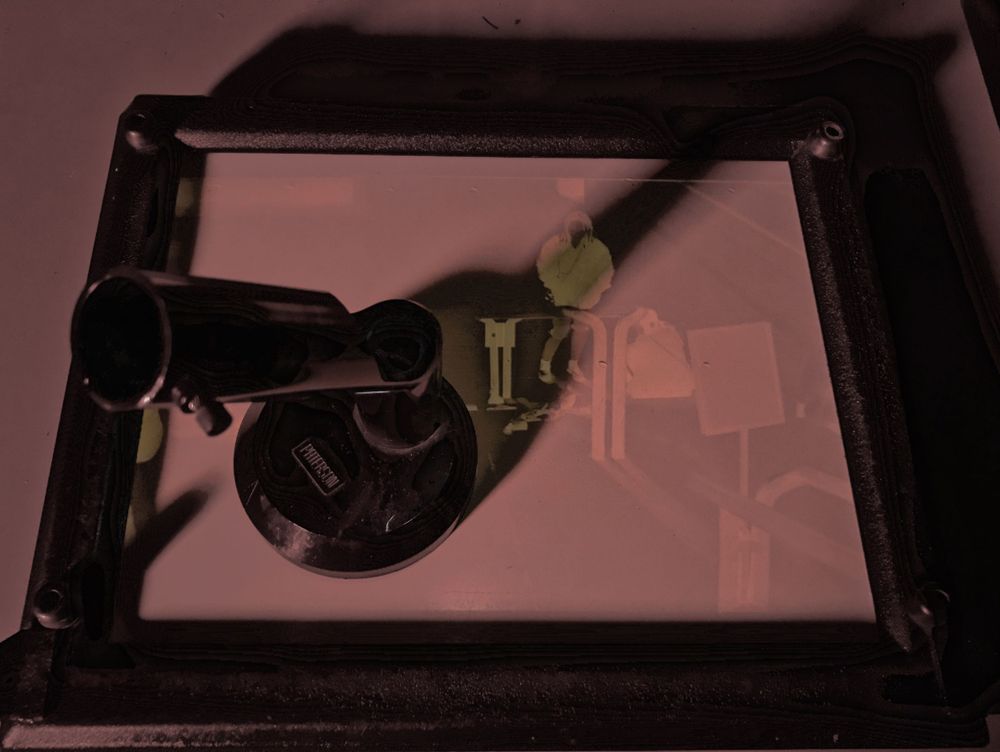
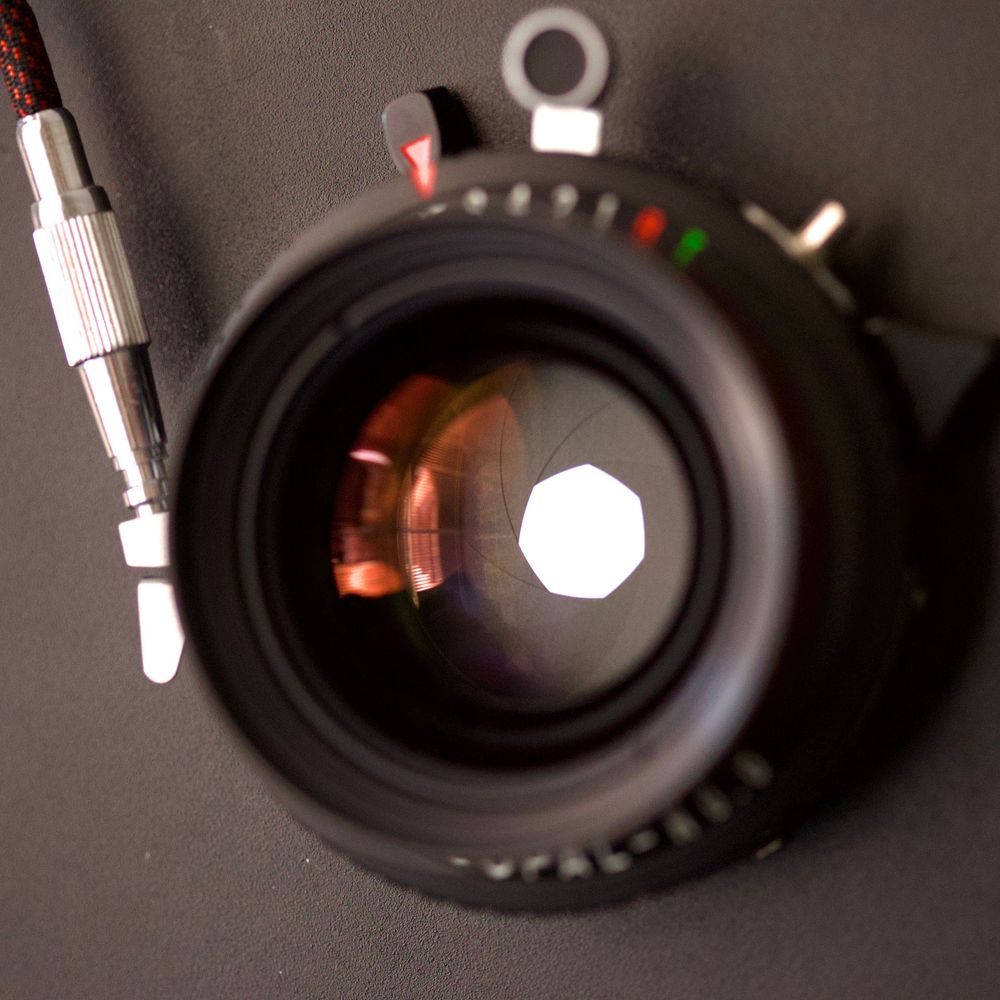
Below, left to right: a camera obscura [citation 3], a print in a chemical bath, a photograph being projected by an enlarger, an aperture, a negative and the print it yielded, 4x5 format black and white negatives.
The Americans & ‘Religion in the Form of Art:’
Spirit or Geist is a the knowledge of a society or the 'Spirit of the times' to use a common phrase. History is the dialectical realization of Spirit (Hegel, §28). One of many works of photographic art which reflects this is Robert Frank’s book The Americans. It reflects the spirit of the time and is a representation of history on its way to the recognition of Spirit. This book was taken in post-World War II America and reflected the zeitgeist of America in its point in history so well that it was banned in America for fear that it would accurately reflect the tremendously dark human thought of the era. Hegel, in his “Religion In the Form of Art,” wrote on art’s role in the development of Spirit;
Since, then, its trust is broken, and the substance of the nation bruised, Spirit, which hitherto mediated the unstable extremes, has now stepped forth as an extreme, that of self-consciousness grasping itself as essence. This is Spirit, inwardly sure of itself, which mourns over the loss of its world, and now out of the purity of self creates its own essence which is raised above the real world. In such an epoch, absolute art makes its appearance. Prior to this it is an instinctive fashioning of material; submerged in the world of determinate being, it works its way out of it and into it; it does not possess substance in the free ethical sphere, and therefore does not have the character of free spiritual activity for the self at work. Later on, Spirit transcends art in order to gain a higher representation of itself, viz. to be not merely the substance born of the self, but to be, in its representation as object, this self, not only to give birth to itself from its Notion, but to have its very Notion for its shape, so that the Notion and the work of art produced know each other as one and the same (Hegel § 701-702).
Frank’s work takes place in a nation which is bruised, the Spirit he communicates becomes an extreme and is therefore banned, and it is “absolute art” for the notion and the work are “one in the same.” This is seen in Frank’s work and its place in history.
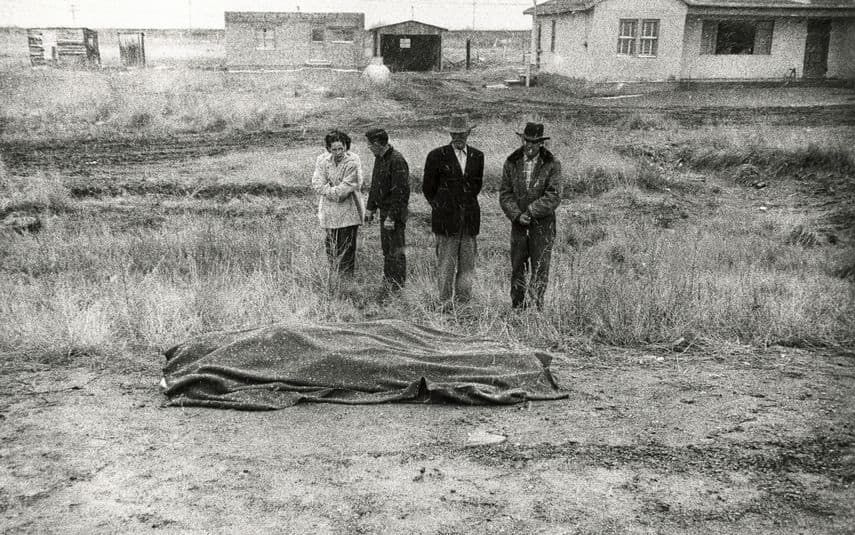
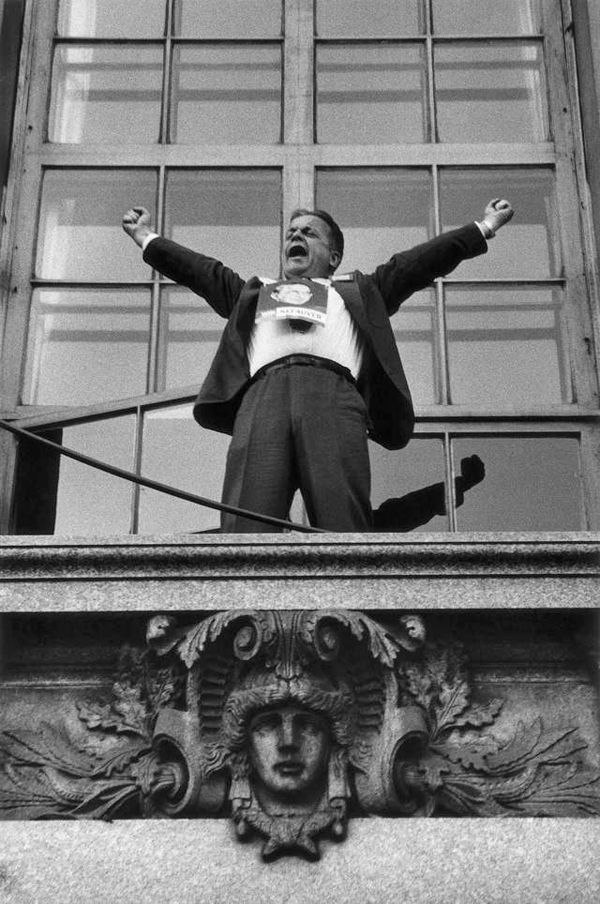
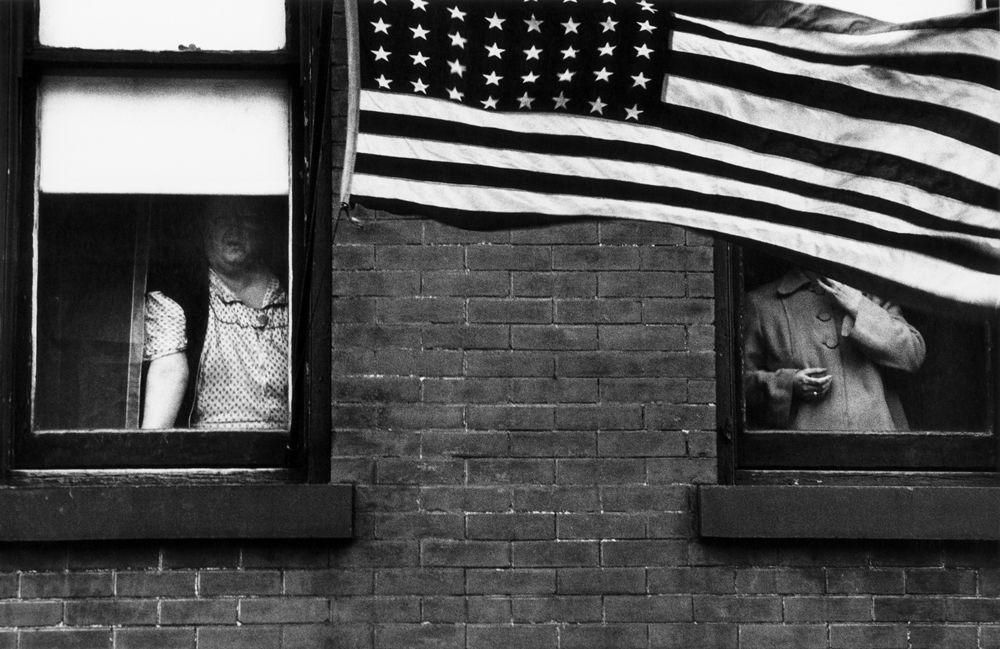
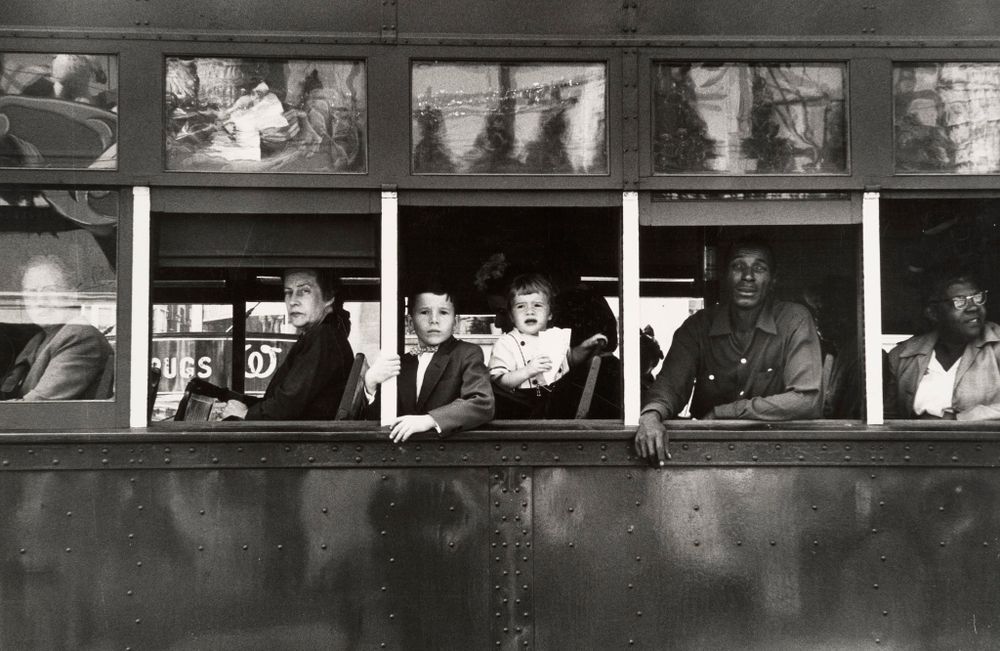

Above: Images from Robert Frank's "The Americans"[See citation 4]
Legendary Postmodernist writer, Jack Kerouac, says of Frank’s images “The humor, the sadness, the EVERYTHING-ness and American-ness of these pictures!” and “The gray film that caught the actual pink juice of human kinds” (Kerouac). These quotes show just how well Frank captured Spirit via his images. Hegel writes of the universal Spirit that “This is nothing but his own acquisition of self-consciousness, the bringing-about of its own becoming and flection into itself” (Hegel, 178-180). With the understanding that self-consciousness is attained by recognizing others as self-conscious and rational like oneself, this quote describes what Frank was doing. He was recognizing others in the most profound way.
Minor White’s Philosophy of Spirit in Photography: Equivalence
This Hegelian explanation of photography was noticed by one of the greats of photography, Minor White. His theory, Equivalence, can be read as an explanation of photography as an expression of the Hegelian Spirit. To quote him: “Not having an exact equivalent for the word ‘poetic’ in photography we will suggest the word ‘vision,’ meaning not only sight, but insight. The effect that seems to be associated with Equivalence may be worded thus: When both subject matter and manner of rendering are transcended, by whatever means, that which seems to be matter becomes what seems to be spirit.” Furthermore he says, when talking of the photographer, “It is their efforts that matter, to communicate-evoke with individuals who are in tune with the central core of universality common to both man and spirit” (White). How we perceive reality is shaped by our ideas. Photography is a shaping of this visual reality in the form of light recordings. Spirit is created in an image when that image communicates something beyond the mere thing being photographed and when that thing is in tune with the spirit of all a society.
Image sources:
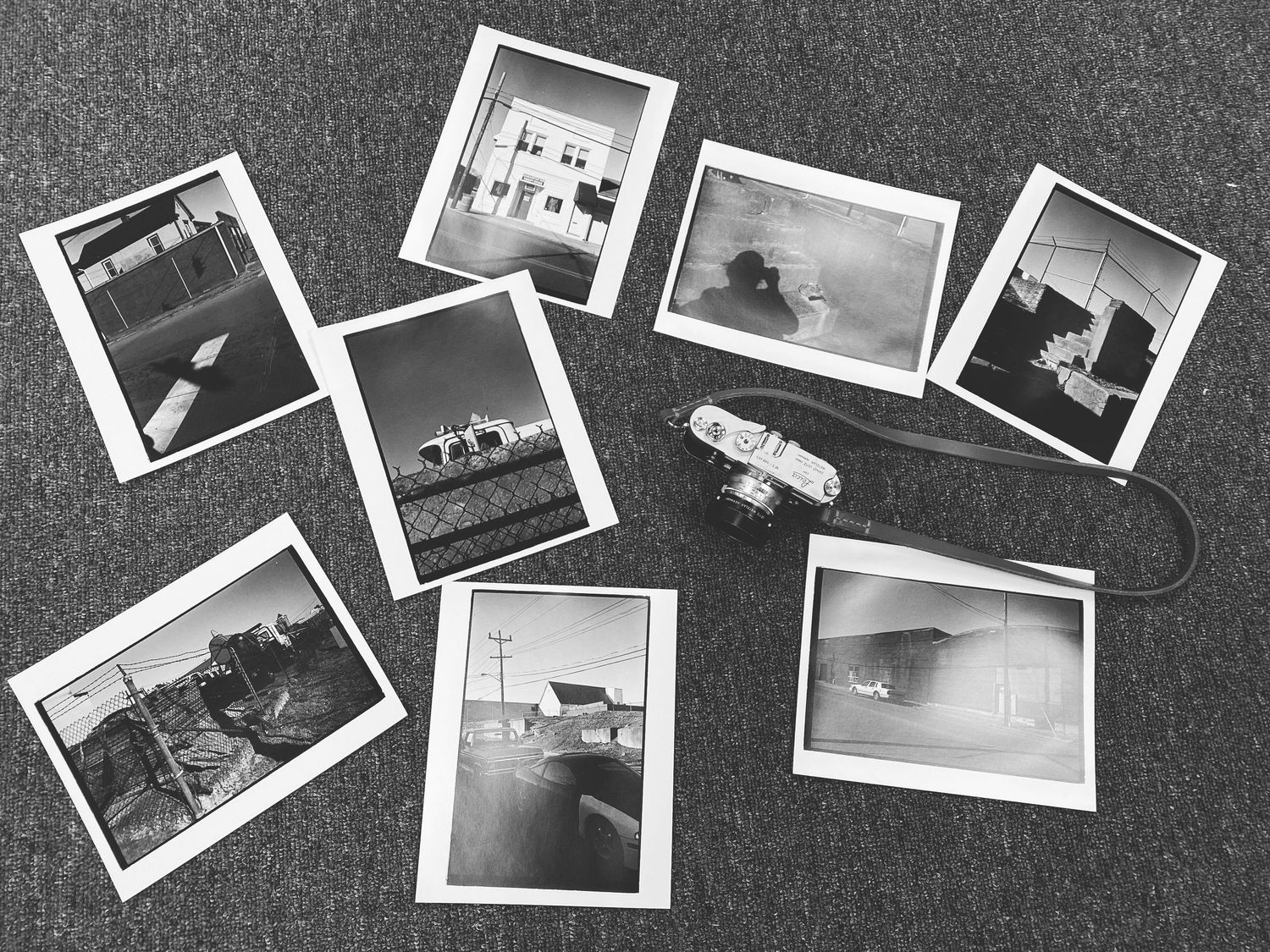
[All non-cited images are by me]
1: Cartier-Bresson-Henri, "The Decicive Moment." The Guardian. https://www.theguardian.com/artanddesign/2014/dec/23/henri-cartier-bresson-the-decisive-moment-reissued-photography
2: Cartier-Bresson-Henri, "Albert Camus." Flickr. https://www.flickr.com/photos/32357038@N08/8462646730.
3: Unknown. "Principle of the Camera Obscura." Encyclopedia Brittanica. https://www.britannica.com/technology/camera-obscura-photography.
4: Frank, Robert. The Americans. Steidl, 1958.
Textual sources:
Cartier-Bresson, Herni. The Decisive Moment. New York, Simon and Schuster, 1952.
Derbyshire, Jonathan. The Philosopher in the Darkroom: Derek Parfit’s Photographs. Financial Times. 27 April 2018. https://www.ft.com/content/8b4f9470-4816-11e8-8ae9-4b5ddcca99b3.
Hegel, G. W. F. (1977). Phenomenology of Spirit. (A.V. Miller, Trans.). Oxford, UK: Oxford University Press.
Kerouac, Jack. "Introduction." The Americans. By Robert Frank. 1959.
White, Minor. "Equivalence: The Perennial Trend." Aperture, no. 2, 1952, pp. 5-12.